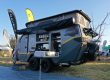
How to Choose the Best Off-Road Caravan in South Africa
1. The Great Outdoors First: Why Lifestyle Defines the Right Off-Road Caravan
1.1 Beyond the Spec Sheet: Freedom, Exploration, and the Spirit of Overlanding
Here’s something nobody tells you when you start shopping for an off-road caravan: the specs don’t matter nearly as much as you think they do.
Don’t get us wrong. The chassis matters. The suspension matters. The build quality matters. But when you’re parked somewhere beautiful in the Cederberg with a cold one in your hand and the braai going, you’re not thinking about your axle rating. You’re thinking about whether the bed is comfortable, whether there’s enough space to move around, and whether you can hear the bushveld waking up in the morning.
That’s what we build for. Adventure. Freedom. The feeling of being outside with the people you love, in places most people only see in magazines.
Every caravan on the market that’s survived more than a few years is a good caravan. That’s just the truth. The ones that aren’t good enough fall away. So the real question isn’t “which is the best caravan?” It’s “which caravan fits the life you actually want to live?”
1.2 The “Outdoor Living” Architecture: Why an External Gourmet Kitchen Matters
If you buy an off-road caravan to sit inside it, you’ve missed the point.
The Nayela range was designed from the ground up for people who want to be outside. That’s why the kitchen is on the outside of the caravan, not tucked away in a corner where you’re cooking in a cramped space with your back to the view. You set up camp, swing out the kitchen, and you’re cooking in the open air with everything within arm’s reach.
The caravan itself? That’s your luxury sanctuary. Dust-free, insulated, comfortable. You retreat to it when you sleep or when the weather turns. The rest of the time, you’re living where you should be: outside.
1.3 Setup Friction: Why 5-Minute Camp Deployment Beats 30-Minute Canvas Wrestling
Anyone who’s set up a canvas tent trailer in the wind knows the drill. Twenty minutes of poles, zips, and mild swearing. Then you do it all again in the morning.
With a pop-top caravan, you pull into camp, pop the roof (five minutes with actuators, a bit longer by hand if you prefer the manual option), and you’re done. Bed’s made. Kitchen swings out. Awning rolls out. If it’s a fixed-roof model like the Bateleur or Mahem, it’s even simpler: pull up, open the door, you’re home.
That might not sound like a big deal on paper. But after eight hours on a grondpad, the difference between a five-minute setup and a thirty-minute wrestling match is the difference between enjoying your evening and just surviving it.
2. The Core Decision Matrix: What to Look for When Buying an Off-Road Caravan
2.1 Bed Layout & Space: The Slide-Out Walk-Around Island Bed Advantage
Let’s talk about the thing you’ll spend a third of your trip doing: sleeping.
Most off-road caravans in this size class force you to choose. Either you get a decent bed, or you get a bathroom, or you get living space. Pick two.
The Nayela range cracks this problem with a slide-out bed that extends out the back of the caravan. When it’s retracted, you’ve got a compact towing footprint. When you’re parked, it slides out and gives you a proper walk-around island queen bed. No crawling over your partner at 2 AM. No contorting yourself into a corner.
It’s a small thing that makes a massive difference to how the whole interior works. Because the bed isn’t permanently eating up floor space, the rest of the caravan can breathe. You get a bathroom AND an island bed AND room to move. In a shell that tows like something much smaller.
2.2 Fridge Ergonomics: Standard Upright Refrigeration vs. Chest Freezers
This one creates real debate around the campfire. Chest freezers are the traditional off-road choice: they’re efficient, they stay cold when you open them, and nothing falls out when you hit a bump.
But here’s the other side. Every time you need something from a chest freezer, you’re unpacking layers of food to find the butter that’s migrated to the bottom. After a week of camping, it becomes a frozen archaeological dig.
Nayela fits an upright domestic-style fridge as standard across the range. Niel Marais, the man behind the brand, puts it simply: it’s tidier. You can see everything. You grab what you need and close the door.
Some off-roaders will tell you an upright fridge means things bounce around on rough roads. Fair point. It’s a preference thing, and we’re not going to pretend one is objectively better than the other. But we can tell you that the upright fridge isn’t an optional extra on a Nayela. It comes standard. On most competitor caravans, you’ll pay extra for the upgrade.
2.3 Ablution Choices: En-Suite Luxury vs. External Wash Hubs vs. Campsite Touring
For some people, a private toilet and shower inside the caravan is non-negotiable. For others? “I stop at the place where there are ablutions,” as Niel says.
There’s no wrong answer. What matters is that you know which camp you’re in before you buy. If you’re touring established campsites with facilities, you might not need an internal bathroom. If you’re wild camping in Botswana or the Kgalagadi, you absolutely do.
Most models in the Nayela range offer a full internal bathroom with flush toilet and shower. The Bateleur starts without one but can be fitted with a full bathroom as a bolt-on upgrade. Same caravan, your choice.
2.4 Power & Solar Autonomy: Right-Sizing Lithium and Solar for Remote Bush Camps
Going off-grid means one thing: there’s no plug where you’re going.
How much solar and battery capacity you need depends entirely on where you camp and for how long. A weekend in the Waterberg is different from two weeks in the Namib. That’s why upgradability matters. You want a caravan that lets you right-size your power system to your actual needs, and upgrade later if your trips get more ambitious.
Nayela builds for this. Battery packs can be upgraded depending on your power draw. Solar panels can be added or expanded. You’re not locked into whatever the factory decided was “enough.”
2.5 Gear Storage: The 600L Heavy-Duty Front Nose Box Advantage
Here’s a practical detail that’s easy to overlook: where does your stuff go?
A nose box bolts onto the front A-frame of the caravan and gives you roughly 600 litres of extra storage. That’s tent pegs, firewood, recovery gear, camp chairs, braai equipment: all the bulky stuff that would otherwise eat into your living space.
Not every caravan can accommodate a nose box. The Nayela range is designed for it from the start. It’s an option on most models, and it transforms how you pack.
3. Materials & Climate Control: Insulated Fibreglass vs. Steel and Aluminium
3.1 The Heat Challenge: How Metal Bodies Conduct and Radiate Sun Heat
South Africa in January. Your caravan has been sitting in full sun since 10 AM. Touch the outside of a steel or aluminium caravan and you’ll pull your hand away. That heat doesn’t stay on the outside. Metal conducts. The cabin becomes an oven.
This isn’t a knock on metal caravans. They have real strengths: they’re tough, they’re proven, and there are excellent metal-bodied caravans on the market. But heat conduction is a physics problem that metal bodies have to solve with air conditioning, ventilation, or just tolerating it.
3.2 Double-Wall Insulated Fibreglass: True All-Weather Thermal Performance
Nayela builds with fibreglass for a specific reason: thermal performance.
The body is a double wall with insulation sandwiched in between. Fibreglass doesn’t conduct heat the way metal does. In summer, the cabin stays noticeably cooler. In winter, it holds warmth better. It’s the same principle as a cooler box: insulate, and the inside stays comfortable regardless of what’s happening outside.
Is fibreglass stronger than steel? Not necessarily. But it’s strong enough for serious off-road work, and when you add the thermal insulation, the dust-sealing properties, and the seamless mono-hull construction (no joints to crack or leak), it becomes a compelling choice for the conditions we face in southern Africa.
3.3 A Respectful Market Stance: Understanding Material Choices Without the Hype
Let’s be straight about something. There are excellent steel caravans, excellent aluminium caravans, and excellent fibreglass caravans in South Africa. They’ve all been on the market long enough to prove themselves. If they weren’t good, they’d be gone.
The material choice isn’t about better or worse. It’s about what matters to you. If thermal comfort in extreme conditions is high on your list, fibreglass with proper insulation has a real advantage. If maximum impact resistance is your priority, steel has a case to make. Every choice has trade-offs.
We’re not here to bash anyone else’s approach. We’re here to explain ours.
4. Engineering for Southern African Corrugations & Safety Redundancy
4.1 Towing Dynamics: Matching the Caravan’s Track and Height to Your 4×4
When you’re on a tight bush track, you want to know exactly where your caravan is. If your bakkie fits through, your caravan should fit through too.
The Nayela pop-top models (Okapi, OkapiX, Sahara X, Oribi) sit low when the roof is down. Same height, same width as your tow vehicle. You know where the bakkie went? The caravan went there too. No guessing whether that low branch is going to catch your roof, no worrying about a narrow gap between trees.
Fixed-roof caravans are taller by nature. That’s the trade-off for permanent standing height. The Bateleur and Mahem are built for gravel roads and touring routes rather than tight bushveld tracks, and that’s perfectly fine for how most people actually use them.
The Okapi’s round nose also gives it a genuine aerodynamic advantage. Less wind drag means better fuel economy and more stable towing at highway speeds. It’s physics, not marketing.
4.2 Positive-Pressure Dust Filtration: How Cabin Vents Eliminate Bulldust
Anyone who’s driven the Kgalagadi road or the corrugated stretch between Nata and Maun knows what bulldust does to everything inside your caravan. It gets in through every seal, every joint, every tiny gap, and coats your bedding, your clothes, your food.
Nayela uses a positive-pressure system: a vent on top of the caravan pushes air outward, creating higher air pressure inside the cabin than outside. Dust can’t migrate in against that pressure. It’s simple, it’s passive, and it works.
4.3 Double-Axle Safety Redundancy: Flat-Tyre Security in Dangerous Wildlife Zones
This one matters more than people realise until they need it.
Picture this: you’re in Kruger, it’s getting dark, and you pick up a puncture on the caravan. With a single axle, you’re stuck right there. Changing a wheel on the roadside with elephants or buffalo nearby isn’t anyone’s idea of a good time.
With a double axle, you keep driving. Carefully, but you keep driving. Get to the next rest camp, change the wheel somewhere safe. You can even lose an entire axle and still limp to safety. That’s not a feature on a spec sheet. That’s genuine peace of mind.
The trade-off? Double axle is slightly heavier to tow. For most people pulling off-road, that trade is worth making.
4.4 Pop-Up Roof Dual Benefits: Low Towing Drag & Natural Camp Airflow
The pop-top gets talked about mainly as a towing advantage, and it is. But what Niel Marais highlights is two other benefits that don’t get enough attention.
Airflow. When the roof is raised, the canvas sides create natural cross-ventilation through the caravan. In a hot South African climate, that’s not just nice to have. It’s genuinely comfortable without running fans or air conditioning.
Natural light. A fixed-roof caravan with small windows can feel like a dark box. With the pop-top raised, light floods in from all sides. It changes the feel of the whole space.
You can get the roof with electric actuators (push a button, it goes up) or manual operation. Some people prefer the convenience. Others trust a mechanism with no electronics to fail in the bush. Both are available.
5. Off-Road Caravan Brands in South Africa: Who Builds What
South Africa has some of the best off-road caravan builders in the world. That’s not marketing. It’s what happens when you build for corrugations, bulldust and Botswana sand. Every brand below has been around long enough to prove itself. They just solve the problem in different ways.
Here’s a straight overview, in alphabetical order. No rankings. The right one is the one that fits how you travel.
Bush Lapa
Built in Paarl since 2010 by mechanical engineer Jannie Oeschger. Bush Lapa builds its bodies and chassis from 3CR12 stainless steel, with aluminium interiors. A full slide-out kitchen comes standard, and the units are compact and agile behind a 4×4. If you want a tough, lighter caravan that follows your bakkie down narrow tracks, Bush Lapa is worth a look.
Conqueror
Conqueror’s roots go back to military equipment built for the South African Army. The Conqueror camper followed in 1997, built by Thinus and Philip de Vries. It’s one of the best-known names in off-road camping, with a nationwide dealer network and awards from The Great Outdoors Guide. If you want a proven, compact camper with service points everywhere, Conqueror has the track record.
Echo4x4
Echo4x4 builds a wide range, from off-road campers to full off-road caravans like the Kavango and the Kunene (which sleeps five). It also runs 4×4 accessory and fitment branches across the country. If you want choice in size and one place to kit out the bakkie too, Echo4x4 covers a lot of ground. [VERIFY: founding year and current branch list before we mention either]
Jurgens
The name most South Africans grew up with. Jurgens has built caravans here since 1952, and in 1998 it launched the Xplorer, Africa’s first mass-produced off-road caravan. There are still plenty of Jurgens off-roaders on the road and on the pre-owned market, which says a lot about how they were built. [VERIFY: current Jurgens off-road range before we describe it as current]
Where Nayela fits
We build for one kind of traveller: people who want real off-road capability without giving up a proper bed, a bathroom and a clean, comfortable cabin. That’s why the Okapi, OkapiX and Sahara X use a seamless fibreglass shell with active positive cabin pressure, why the upright fridge is standard, and why the island bed slides out. We’re backed by 40 years of VZS steelwork in Reitz.
Is that the right choice for everyone? No. If you want the lightest possible setup for tight tracks, a compact camper might suit you better. If you want to spend weeks in the bush in comfort, take a look at the range below.
6. Matching the Model to Your Adventure: The Nayela Range
Every Nayela is a good Nayela. The question is which life you live.
6.1 Nayela Okapi & OkapiX: The Clean-Sheet Original for Luxury Touring Couples
The Okapi is where it all started. Designed from a completely clean sheet, not based on any existing caravan. Niel and the team didn’t look at what Bushlapa or Conqueror or anyone else was doing and try to build something similar. They started from scratch with one principle: build a luxury off-road caravan.
The result is a caravan that still looks like nothing else on the road. When an Okapi drives past you on the N1, you know what it is. That round nose, the distinctive profile. It’s unmistakable.
The OkapiX takes the same platform and steps it up with 16-inch wheels (upgraded from the original 15-inch) and enhanced off-road capability. Same beautiful shell, more ground clearance for rougher terrain.
Best for: Couples who want luxury and capability in equal measure. Weekend bushveld trips to extended overland tours.
6.2 Nayela Sahara X: Apex Off-Roading with Independent Suspension & 400mm Clearance
The SaharaX has the same body as the OkapiX. The difference is underneath: full independent coil spring suspension.
What does that mean in practice? Less strain on the caravan body over rough terrain. More articulation over uneven ground. Slightly more ride height from the coil springs. It’s the Nayela for people who want to push deeper into serious off-road terrain without compromise.
This is also the model that sealed a deal with an Australian caravan manufacturer. Australia, arguably the toughest off-road caravan market in the world. They looked at the Sahara X and said: this is what we want. The body barely needed changes. If it handles the Australian Outback and “the Lap” (that’s driving around the entire country, which takes about a year), your Botswana trip is a walk in the park.
Best for: Serious overlanders who want the most capable off-road platform Nayela builds.
6.3 Nayela Oribi: 4-Sleeper Solid-Body Family Overlanding (Botswana-Proven)
Family of four? The Oribi is your caravan.
It sleeps four inside a hard-body shell. No canvas fold-outs exposed to rain and wind. No sending the kids up onto a roof tent. Everyone sleeps inside, protected, comfortable, safe.
And here’s the thing most people don’t expect: you can upgrade the Oribi to be just as luxurious as any other model in the range. Movers, solar panels, the works. It’s not the “budget family option” with stripped-out features. It’s the full Nayela experience in a layout that works for families.
Darrel from Opposite Lock took an Oribi into Botswana specifically to prove that a family of four could do a proper overland trip with all of them sleeping inside the caravan. The YouTube video is on the Nayela website. It wasn’t a sponsored plug either: they took other caravan brands on the same trip. Real comparison, real conditions.
Best for: Families with kids who want proper overlanding without compromising on comfort or safety.
6.4 Nayela Mahem: The Fixed-Roof ‘House on Wheels’ for Extended Basecamp Living
The Mahem is for people who find a beautiful spot and stay a while.
It’s a fixed-roof caravan, inspired by the big Australian tourers. Full standing height everywhere, all the time. More interior space than any other model in the range, with room for serious customisation. One owner asked them to remove the standard table and build a higher one he could work from because he was too tall for the original. They did it.
The cabinets are all aluminium. Nothing in the Mahem can rust. That’s a real long-term ownership advantage that most buyers don’t think about until five years in.
Roll out the large awning with an extension and you’ve got a massive covered outdoor living area. Add the bigger battery setup, air conditioning if you want it, and you’ve essentially got a comfortable home that happens to have wheels.
It’s built on a double axle and tested on gravel roads. It’s more rugged than your average touring caravan, but it’s not trying to be a deep-bush crawler. It’s a luxury tourer that can handle real South African roads.
Best for: Couples or retirees who want maximum space and luxury for extended stays. The “park and live” crowd.
6.5 Nayela Bateleur: Agile Single-Axle Touring with Modular Bolt-On Upgrades
The Bateleur gets more enquiries than any other model in the range. And here’s the interesting part: it’s marketed as the entry-level caravan, but the first ten units on order all came with a bathroom and extra features fitted. Nobody’s actually buying base spec.
That tells you everything about this caravan. The starting price gets people in the door. Then they discover they can add a nose cone (600 litres of extra storage), a full bathroom, an upgraded kitchen, more water storage, solar panels, an awning, all without any structural changes to the caravan. Same shell, any spec level.
The fixed roof means instant livability. Pull over after a long day, climb in, sleep. No opening the pop-top, no setup. Just stop and rest. For people who move every day, that’s a different kind of comfort.
It’s the first and only single-axle model in the Nayela range. Built on the same chassis as the Okapi, which is an off-road platform, so it’s overbuilt for tar roads and very stable on the highway. The wide wheel spacing keeps it planted.
Best for: Buyers who want to start smart and grow the caravan over time. Also perfect for solo travellers or couples who value easy towing and quick stops.
7. Manufacturing Heritage, Resale Value, and Nationwide After-Sales Support
7.1 The 40-Year VZS Group Legacy: Industrial Rigor in Caravan Engineering
Nayela doesn’t exist in a vacuum. It’s part of the VZS Group (Van Zyl Staalwerke), which has been manufacturing farm implements in Reitz, Free State for over 40 years. That’s four decades of engineering, fabrication, and building things that have to work in harsh South African conditions.
This isn’t a startup figuring out production. It’s a purpose-built caravan brand backed by an industrial manufacturing legacy that knows what “built to last” actually means.
7.2 The National Mobile Service Fleet: Rapid Field Support Across South Africa
Here’s something most caravan buyers don’t think about until something goes wrong: who helps you?
VZS has a national fleet of vehicles and salespeople already driving routes across South Africa for their implement business. That network doubles as Nayela’s support backbone. If you need a part somewhere remote, there’s a good chance a VZS vehicle is already heading in that direction.
Nayela also has dealerships across the country. But the VZS fleet adds something very few caravan manufacturers can match: actual reach.
7.3 Second-Hand Resale Value (‘Gevestig’): Protecting Your Capital Investment
A caravan in this price range is a serious purchase. You want to know that if your circumstances change, you can sell it and get your money back.
Nayela’s resale values are what South Africans call “gevestig”: established. There’s strong second-hand demand. The market knows the brand, trusts the build quality, and is willing to pay for it. You’re not just buying a caravan. You’re making a purchase that holds its value.
7.4 Australian Outback Validation: Built Tough Enough for “The Lap”
When an Australian caravan manufacturer comes to South Africa looking for a partner, and they choose your caravan with minimal modifications, that says something.
Australia is known for the most demanding off-road caravan market in the world. Australians regularly drive “the Lap”: a year-long journey around the entire country through desert, corrugated outback tracks, and remote wilderness.
The Nayela body handled their requirements. They wanted independent suspension (the Sahara X delivered). They needed minor adaptations, but the fundamental platform was ready.
8. How to Buy Your Nayela Caravan
8.1 Using the Online Quote Builder to Customise Your Spec
Every Nayela is customisable. The best way to start is with the online quote builder on nayela.co.za. Pick your base model, add the options that matter to you, and get an indicative price. It takes five minutes and gives you a clear picture of what your ideal setup looks like.
8.2 Financing and Indicative Price Ranges
Nayela caravans are a premium purchase. Indicative pricing ranges from the Bateleur (the most accessible entry point) through to the Mahem (the flagship). Contact your nearest dealer or use the quote builder for current pricing on your specific configuration.
Financing options are available through Nayela’s dealer network. Ask about current terms when you request your quote.
8.3 Visiting the Factory in Reitz or Booking a Dealer Demonstration
Nothing beats seeing the build process in person. The Nayela factory in Reitz, Free State is where it all happens. Fibreglass moulds, composite panel assembly, chassis fabrication, interior fit-out: it’s all under one roof.
If Reitz isn’t practical, Nayela’s dealership network across South Africa can arrange a demonstration. Walk through the caravan, open every cupboard, test the slide-out bed, feel the insulation. It’s the only way to really understand what you’re buying.
The Nayela body handled their requirements. They wanted independent suspension (the Sahara X delivered). They needed minor adaptations, but the fundamental platform was ready.
9. Frequently Asked Questions (FAQ)
What are the best off-road caravan brands in South Africa?
South Africa has several well-established off-road caravan builders, including Bush Lapa, Conqueror, Echo4x4, Jurgens and Nayela. They all build for local conditions but take different approaches: stainless steel bodies, compact campers, wide model ranges or seamless fibreglass shells. The best brand is the one that matches how far off-road you go, how many people travel with you and how much comfort you want in camp.
Which is the most luxurious off-road caravan in South Africa?
Off the grid, luxury isn’t chandeliers. It’s a proper bed, your own bathroom, a cabin that stays cool and a cupboard with no dust in it. Look for a walk-around island bed, an internal toilet and shower, an upright fridge and real dust sealing. Every Nayela model can be specced with all of these.
What’s the difference between an off-road caravan and a normal caravan?
It’s what sits underneath. An off-road caravan needs a stronger chassis, suspension that can take corrugations, more ground clearance and a body that keeps the dust out. Every Nayela runs on a fully galvanised chassis, with up to 305mm of ground clearance on the OkapiX. A road caravan is built for tar and campsites..
Single or double axle for off-road travel?
A double axle spreads the weight and keeps you mobile if you get a flat in a game reserve. You can keep driving to a safe spot before changing the wheel. A single axle is lighter and easier to handle. The Okapi, OkapiX, Sahara X and Mahem are double axle. The Bateleur is our single-axle model.
Pop-top or fixed roof?
A pop-top sits as low as your bakkie when it’s closed, so it follows you down tight bush tracks and tows with less drag. A fixed roof gives you standing height all day, and you just climb in and sleep. Pop-tops: Okapi, OkapiX, Sahara X, Oribi. Fixed roofs: Mahem, Bateleur.
Nayela Caravans. Built in Reitz, Free State. Backed by 40 years of VZS Group engineering. Designed for people who’d rather be outside.
Visit nayela.co.za to build your quote, or find your nearest dealer.